
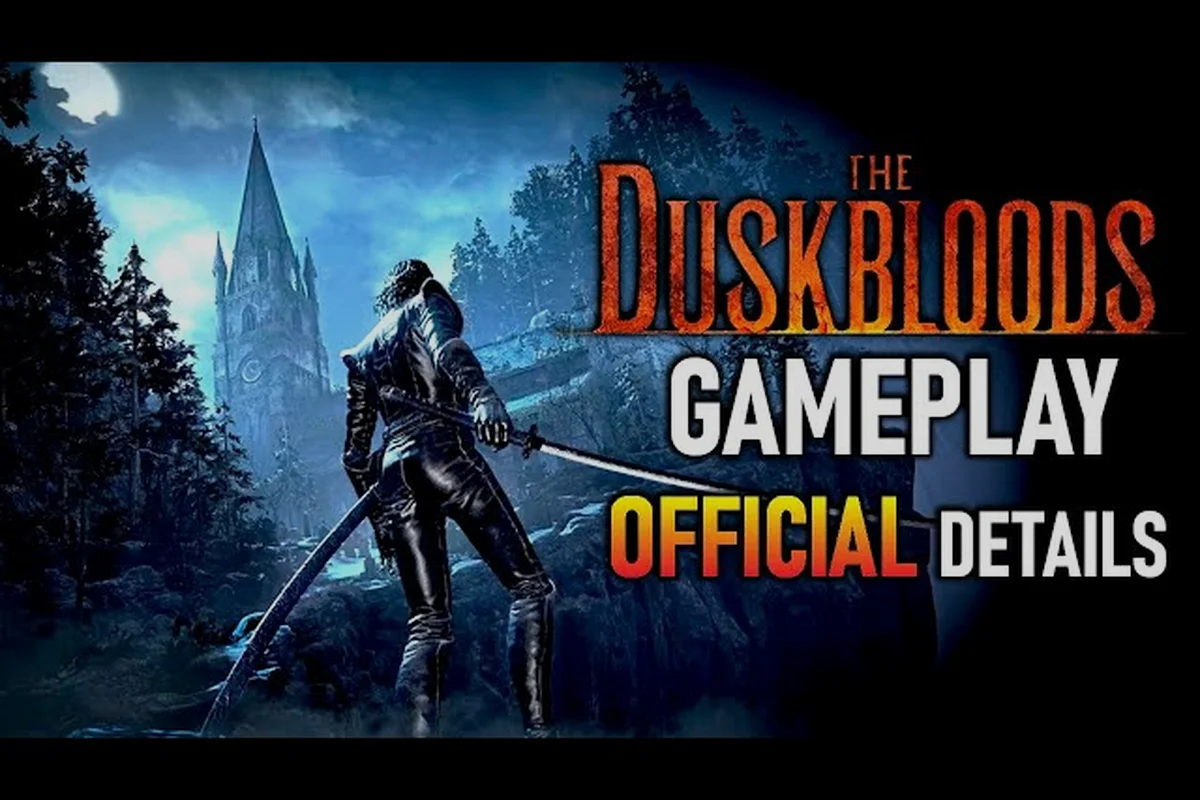
Dropping into your first Dusk Battle can feel overwhelming, especially when you are still figuring out the basics. These The Duskbloods tips for beginners focus on the eight essentials that matter most, from movement mechanics to match flow, so you can learn faster and die less.
Why New Players Need a Structured Approach to The Duskbloods
The Duskbloods is a multiplayer-focused action game from the creators of Elden Ring, built exclusively for Nintendo Switch 2. Unlike a traditional soulslike, you are not exploring a persistent world — you are dropped into instanced matches called Dusk Battles with up to eight players. Each match revolves around earning Victory Points, and understanding that core loop is the difference between a frustrating first hour and a confident one.
Because the game blends PvP and PvE elements, new players often struggle with two things: knowing where to go and knowing when to fight. The good news is that the game gives you clear objectives, but only if you understand the interface. That is why this The Duskbloods tips for beginners guide covers everything from the controls layout to the settings menu, so you can remove guesswork before you even load into your first match.
This guide condenses the verified findings from the closed network test and official interviews into eight practical essentials, covering control customization, network stability, the Victory Points economy, Dusk Cycle routing, and the combat fundamentals that separate consistent Bloodsworn from those who bleed out early in a Dusk Battle.
-
A breakdown of the default controls and how to remap them for comfort.
-
The best settings for performance, targeting, and camera behavior.
-
Eight actionable tips that cover movement, combat, and match strategy.
-
A clear explanation of Victory Points and how to earn them efficiently.
-
Answers to common beginner questions about progression and multiplayer.
If you have already read our how to play guide, this article goes one step deeper into the tactical habits that separate consistent players from those who bleed out early. While the basics cover movement and objectives, these eight essentials focus on the subtle adjustments—button mapping, camera settings, and point-timing awareness—that the network test showed to be decisive in matches where up to eight players compete for a single set of moontears.
The Duskbloods Controls Guide: Mapping Your Arsenal
Before you worry about strategy, you need to know how to move. The Duskbloods uses a control scheme that feels familiar to action game veterans but has a few unique twists that catch new players off guard. The biggest one is the super jump, which is not just a traversal tool — it is a combat escape, a positioning weapon, and a way to close distance on unsuspecting opponents.
Default Button Layout
The default layout on Nintendo Switch 2 places movement on the left stick and camera on the right stick, which is standard. The face buttons handle your basic attack, special ability, and interaction, while the shoulder buttons manage dash, jump, and lock-on. Here is the full breakdown:
| Action | Button | Notes |
|---|---|---|
| Move | Left Stick | Full directional control |
| Camera | Right Stick | Flick to snap behind you |
| Basic Attack | R | Fast, low-damage strikes |
| Special Ability | ZR | Uses Blood Crystals |
| Dash / Dodge | B | Has invincibility frames |
| Jump | A | Single jump by default |
| Super Jump | A + Hold | Charge for higher arc |
| Sprint | Left Stick Click | Toggle or hold in settings |
| Lock-On | ZL | Cycles targets when pressed |
| Interact / Pick Up | Y | Loot and objectives |
| Use Item | X | Quick slot item |
| Map / Score | Minus | Check Victory Points |
Because the game is fast-paced, you will want to build muscle memory for the dash and super jump combo. Pressing B then immediately holding A lets you chain a dash into a super jump, which is one of the fastest ways to reposition in a fight. Practice this in the tutorial area until it feels automatic, because it is the single most useful movement tech in the game.
Remapping for Comfort
The default layout works, but it is not optimal for everyone. If you find yourself accidentally pressing the wrong buttons during tense moments, open the settings menu and remap. Many players report that moving dash to the right trigger and keeping attack on the face buttons feels more natural, since it frees your thumb for camera control while dodging.
Given the superhuman mobility of the Bloodsworn—sprint, super jump, and double jump are all bound to face buttons by default—remapping can significantly reduce finger strain during extended Dusk Battles. Consider moving jump to a shoulder button if you find yourself accidentally burning stamina on double jumps during combat, or remap the dash to a trigger for faster reaction times when dodging boss attacks or rival players.
-
Dash on R instead of B, so you can dodge without lifting your thumb off the right stick.
-
Super Jump on L for players who prefer keeping both hands on the shoulder buttons.
-
Lock-On toggle instead of hold, which reduces finger fatigue during long matches.
The game saves your control profile per account, so you can experiment without affecting anything else. The key takeaway is that comfort beats convention — if a button feels wrong, change it before you build bad habits. During the network test, many players reported that moving the interact button away from the right stick prevented accidental weapon swaps mid-dodge, a small change that noticeably reduced early deaths in chaotic train-level encounters.
The Duskbloods Settings Guide: Optimizing Your Experience
Your settings do more than just make the game look better — they directly affect how well you perform in combat. The Duskbloods settings guide below covers the most impactful options, based on community feedback from the closed network test that ran August 21–24, 2026.
Performance and Camera Settings
The most important setting for competitive play is camera sensitivity. The default value is slightly slow for the game's pace, and most experienced players recommend increasing it by two or three notches. This allows you to track fast-moving opponents during super jump arcs and keeps you aware of threats approaching from off-screen.
| Setting | Recommended Value | Why It Matters |
|---|---|---|
| Camera Sensitivity | 7 or 8 out of 10 | Faster tracking for PvP encounters |
| Camera Distance | Max | More peripheral vision |
| Motion Blur | Off | Reduces visual clutter during dashes |
| V-Sync | On | Prevents screen tearing on Switch 2 |
| Target Switching | Manual | Avoids accidental lock-on changes |
| HUD Opacity | 80% | Keeps important info visible without clutter |
| Subtitles | On | Helps with lore and objective prompts |
The motion blur setting is worth special attention because the game uses heavy camera movement during dashes and super jumps. Turning it off makes those animations feel sharper and reduces the chance of losing your bearings mid-combo. In a PvPvE match where a single misread of your opponent's position can cost you the Victory Points lead, the sharper image from disabling motion blur proved to be a common preference among testers who survived longer engagements.
Network and Matchmaking Settings
Because The Duskbloods is primarily multiplayer, network settings matter. The game includes a connection quality indicator in the top-right corner of the lobby screen, and you should always check it before queueing. If your connection shows as yellow or red, consider adjusting your matchmaking region to find closer servers.
The network test confirmed that Nintendo Switch Online membership is required for online play, and the game uses dedicated servers rather than peer-to-peer. This means connection stability is generally good, but you can still improve your experience by: using a wired LAN adapter if possible, closing background applications on the Switch 2, and avoiding peak hours when the server load is highest. These small steps reduce the chance of lag-induced missteps during the final seconds of a Dusk Battle.
-
Using a wired Ethernet adapter instead of Wi-Fi for consistent latency.
-
Closing background applications that consume bandwidth.
-
Checking the server status page on the official site before long sessions.
Players who followed these settings during the network test reported noticeably fewer hit registration issues, according to community reports on the official Discord. While the dedicated servers handled most of the heavy lifting, those who also disabled motion blur and remapped their dash to a more accessible button found that their melee strikes connected more consistently, especially when fighting near dynamic event objectives where multiple players converged.
8 Essential Tips for New Players
Now that your controls and settings are dialed in, it is time to focus on the actual gameplay. These eight tips are the core of this The Duskbloods tips for beginners article, and they cover the most common mistakes new players make during their first few hours.
According to the Nintendo Store page for The Duskbloods, the game’s core loop revolves around timed “Dusk Cycles” that reset enemy placements and resource nodes, so beginners should prioritize learning each cycle’s safe routes before engaging in combat. Because the cycle resets can spawn new threats or relocate valuable pickups, knowing where to stand when the cycle turns is often more important than raw combat skill, especially in the early minutes of a match when everyone is still jockeying for position.
1. Learn the Super Jump Before Anything Else
The super jump is the most versatile tool in your kit. It is not just for traversal — you can use it to escape ambushes, reach elevated positions for ranged attacks, and dodge ground-based AoE abilities. Practice chaining it with dashes until you can move across the map without touching the ground.
2. Focus on Victory Points, Not Kills
Unlike traditional battle royales, you do not win by being the last one standing. Victory Points are earned through objectives, and kills are just one way to accumulate them. A player who focuses purely on combat will often lose to someone who is quietly capturing points and collecting blood echoes.
3. Use the First Two Minutes to Position
The opening of each match is crucial because it sets the tempo. Instead of rushing toward the nearest objective, take a moment to survey the map and identify high-ground positions. The first two minutes are your best chance to establish a defensive position before the chaos begins.
4. Manage Your Blood Crystals
Blood Crystals are the resource that powers your special abilities, and they do not regenerate over time. You earn them by defeating enemies, collecting drops, and completing objectives. Wasting them on low-impact abilities early can leave you defenseless in the final stretch, so save your strongest attacks for the closing phase of the match.
5. Watch for Destined Rivals
Each match assigns you a Destined Rival — a specific player that you gain bonus Victory Points for defeating. This creates an interesting strategic layer because you can choose to hunt your rival or use them as bait. According to the official Creator's Voice interview, these personal objectives are designed to add role-playing depth to each match.
6. Use Temporary Alliances Wisely
The game allows for temporary alliances during matches, and using them effectively can swing the outcome. If you see two players fighting over an objective, consider joining the weaker side to take down the stronger player first. These alliances are fragile, though — expect betrayal at any moment.
7. Customize Your Bloodsworn for Your Playstyle
Your Bloodsworn is not just a cosmetic choice — different characters have different base stats and ability kits. If you prefer aggressive play, choose a character with high damage output. If you like supporting teammates, pick one with healing or buff abilities. Our best Bloodsworn for beginners guide breaks down each option in detail.
8. Learn the Map Layouts Early
Map knowledge is one of the biggest advantages you can have. Each Dusk Battle map has specific objective spawn points, high-traffic corridors, and hidden shortcuts that become second nature over time. Spend your first few matches exploring rather than fighting — the map awareness you build will pay off in every match after that.
Understanding Victory Points and Match Flow
The Victory Points system is the heart of The Duskbloods, and understanding it is essential for success. Unlike a simple deathmatch, the game rewards a mix of combat, objective play, and risk management. You earn points not only for eliminating other Bloodsworn but also for defeating the match's boss, completing dynamic events, and surviving to the end. This means a player who avoids fights entirely can still win if they consistently secure objectives, while a pure combatant must also keep an eye on the point tally to avoid being overtaken by a more strategic rival.
How Victory Points Are Earned
The exact distribution of Victory Points has been detailed in the official interview with the creators, and the system is designed to encourage varied playstyles. Here is how the points break down: boss kills grant the largest single chunk, dynamic events offer a medium reward that can swing the match, and player eliminations give a smaller but consistent trickle. The system also includes a bonus for being the last alive, but that is only one path to victory, not the only one.
| Action | Victory Points | Notes |
|---|---|---|
| Defeat an Enemy Player | 3 points | Base reward for a kill |
| Defeat Your Destined Rival | 5 points | Bonus for the assigned target |
| Capture an Objective | 4 points | Varies by objective type |
| Assist a Teammate's Kill | 1 point | Encourages teamwork |
| Survive Until End of Match | 2 points | Participation reward |
| Collect Blood Echoes | 1 point each | From defeated enemies |
| Complete a Personal Objective | 3 points | Destined Companion tasks |
The key insight is that objectives are worth more than kills in most cases. Three objective captures equal the same points as five kills, and they are generally safer to attempt. That said, the Destined Rival bonus makes hunting your assigned target a high-value play if you are confident in your combat ability.
The Flow of a Dusk Battle
A typical Dusk Battle lasts between 8 and 15 minutes, depending on how quickly players earn points. The match has three distinct phases that are worth understanding: the opening skirmish where players test each other's loadouts, the mid-game objective push where Dusk Cycles and boss spawns create pressure, and the endgame where the point leader becomes a target. Recognizing which phase you are in helps you decide whether to chase a kill or retreat to secure a safer position.
-
Opening Phase (0–2 minutes): Players spread out, grab early objectives, and scout enemy positions. The pace is slow, and most encounters are skirmishes rather than full engagements.
-
Mid Game (2–8 minutes): The map shrinks as objectives consolidate, and the pace accelerates. This is where the first major team fights happen, and where positioning becomes critical.
-
Closing Phase (8+ minutes): The final objectives spawn, and the match becomes frantic. Players who saved their Blood Crystals for this phase have a significant advantage because they can unleash their strongest abilities without resource concerns.
Understanding this flow helps you make better decisions about when to engage and when to retreat. For a deeper breakdown of the point system, check out our Victory Points explained article. That guide covers the exact point values and offers scenario-based examples, such as whether to abandon a boss fight to deny a rival the final hit, or to sacrifice yourself to prevent the point leader from escaping.
Combat Fundamentals and Movement Techniques
Combat in The Duskbloods is fast and unforgiving, but it follows consistent rules that you can learn. The most important concept is stamina management — every action, from attacking to dashing, consumes stamina, and running out leaves you vulnerable. Because the Bloodsworn's superhuman abilities rely on the same stamina pool, a player who spams double jumps to close distance will find themselves unable to dodge an incoming melee combo, making stamina conservation a core skill rather than an optional optimization.
Core Combat Loop
The basic combat loop is straightforward: attack, dodge, reposition, repeat. Your basic attack is fast but weak, while your special ability is slow but powerful. The trick is knowing when to use each. Against aggressive opponents, wait for them to commit to an attack, dodge through it, and punish with your special ability.
Here are the key combat techniques to practice: first, learn to cancel a dash into a sprint to preserve momentum without extra stamina drain; second, practice jump-attack timing to land hits on enemies who are trying to escape vertically; third, master the parry window on your firearm's melee follow-up, which can stagger an opponent and open them for a full combo. Each of these techniques was highlighted in community discussions after the network test as a differentiator between average and top-tier players.
-
Dash-through punishes: Dashing through an attack puts you behind your opponent, where they cannot block or parry.
-
Jump attacks: Aerial attacks have different hitboxes and can catch opponents who are guarding low.
-
Stagger management: Heavy attacks stagger enemies, but they are also easy to dodge. Use them to interrupt abilities.
-
Retreat techniques: The dash-super jump combo is the fastest way to disengage from a losing fight.
Ranged vs. Melee Playstyles
The Duskbloods features a variety of weapon types, and your choice between melee and ranged combat dramatically changes how you approach matches. Melee weapons deal more damage but require you to be in harm's way. Ranged weapons are safer but consume Blood Crystals for ammunition, which limits how often you can use them.
| Playstyle | Strengths | Weaknesses | Best For |
|---|---|---|---|
| Melee | High burst damage, no resource cost | Requires close range, vulnerable to focus fire | Aggressive players |
| Ranged | Safe distance, good for objectives | Limited ammo, poor in close quarters | Defensive players |
| Hybrid | Flexible, adapts to situations | Weaker in both roles, harder to master | Versatile players |
The weapon system is deep enough that you could spend hours experimenting with different combinations. Our weapons guide covers the full arsenal in detail, including the best options for each playstyle. Whether you prefer a fast melee weapon with a sidearm for pressure or a heavy hitter with a long-range rifle for support, the guide breaks down the strengths and weaknesses of each of the 12+ playable characters' loadouts, helping you find a setup that matches your preferred approach to Dusk Battles.
Common Beginner Mistakes and How to Avoid Them
Every new player makes mistakes, but some are more costly than others. Based on community reports from the network test, these are the five most common errors that lead to early deaths: overextending to chase a low-health enemy into a Dusk Cycle reset zone, ignoring the boss's telegraphed attacks while focusing on a rival player, burning all stamina on a double jump just as a sniper lines up a shot, failing to check the Victory Points leaderboard before deciding to engage, and neglecting to use the environment's verticality to escape a losing fight. Avoiding these five pitfalls will immediately improve your survival rate in the twilight hours.
1. Overcommitting to Fights
The biggest mistake new players make is chasing a wounded opponent into a group of their teammates. That low-health enemy is often bait, and the moment you commit to the chase, you walk into an ambush. Disengage when you have the advantage — a kill is not worth trading your life.
2. Ignoring Objectives
It is easy to get caught up in combat and forget that the match is about Victory Points, not kills. Players who chase every fight often end the match with a high kill count but a low score. Remember that objectives are worth more than kills, and fighting over them is usually the smarter play.
3. Wasting Blood Crystals Early
Using your special ability the moment it is off cooldown is a common mistake. Blood Crystals are scarce, and wasting them on a low-value target leaves you vulnerable when the real fights happen. Save your strongest abilities for the closing phase or for taking down your Destined Rival.
4. Not Using the Environment
The maps are full of elevated positions, cover, and choke points that can give you a massive advantage. New players often fight in the open, where they are easy targets. Use the environment to control engagements and force opponents to fight on your terms.
5. Playing Solo in a Team Game
Even though The Duskbloods is not a traditional team game, temporary alliances are a core part of the strategy. Refusing to work with others puts you at a numerical disadvantage in every major fight. Be willing to ally with strangers — just keep an eye on their intentions.
Frequently Asked Questions
What is the most important thing to learn as a beginner in The Duskbloods?
The super jump and dash combo is the most important skill to master because it is your primary tool for both offense and defense. This movement technique lets you escape dangerous situations, reach elevated positions, and chase down fleeing opponents. Practice it in the tutorial until it becomes automatic before you enter your first Dusk Battle.
How do I earn Victory Points faster?
Focus on capturing objectives rather than chasing kills, because objective captures are worth more points and carry less risk. Your Destined Rival bonus is also worth pursuing, but only if you are confident in winning that fight. Assist on teammate kills whenever possible, since those points add up quickly over a match.
Are there different difficulty settings in The Duskbloods?
The Duskbloods does not have traditional difficulty settings because it is a multiplayer-focused game. Match difficulty comes from the skill level of your opponents, which the matchmaking system tries to balance. However, you can adjust your experience through the settings menu by changing camera sensitivity, target switching behavior, and other performance options.
Do I need Nintendo Switch Online to play The Duskbloods?
Yes, a Nintendo Switch Online membership is required for online play, as confirmed by the official network test details. The game is a Nintendo Switch 2 exclusive and relies on dedicated servers for its multiplayer matches. You can access the tutorial and practice modes without a membership, but all Dusk Battles require an active subscription.
What happens if I lose a match?
Losing a match in The Duskbloods isn’t a dead end—you still earn customization rewards and progression currency based on your performance, even if you place last. Winning isn’t required to unlock gear, so treat every loss as a practice run for movement and match strategy.