
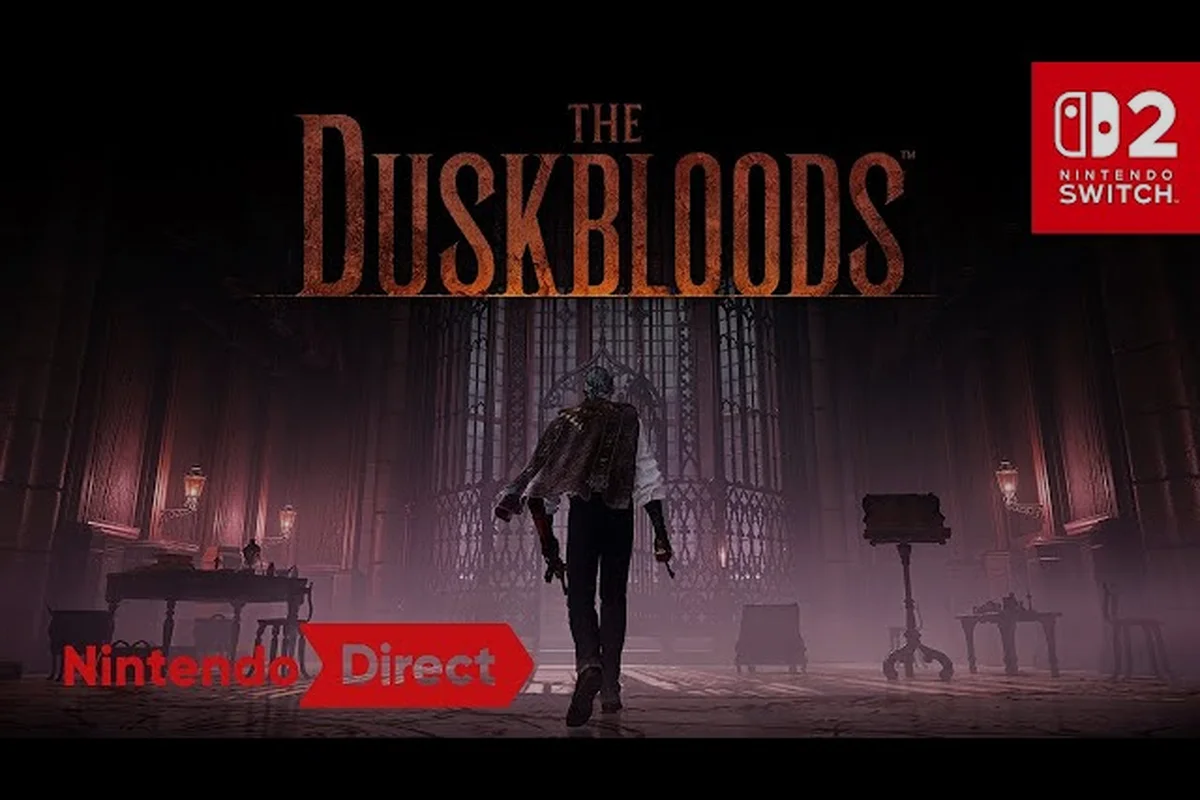
FromSoftware's Switch 2 exclusive finally has a clear multiplayer structure, and the the duskbloods mode list is more ambitious than anything the studio has shipped before. While Elden Ring's co-op and invasions were layered onto a single-player world, The Duskbloods builds its entire identity around structured online play, so knowing every mode before launch will save you from wasting your first network test sessions. Get the full breakdown of each mode, how the up to 8 players cap works, and what ranked play actually tracks.
The Duskbloods Mode List Overview
The the duskbloods mode list centers on Dusk Battles, the core multiplayer loop where up to 8 players compete in instanced matches. According to the official Nintendo store page for The Duskbloods, players take on the role of Bloodsworn — superhuman fighters who use sprint, double jump, and super jump to control the First Blood across each battle. That movement kit is the foundation for every mode, because map control and verticality matter as much as combat skill.
The network test data from TechRadar's coverage confirms that matches use a Victory Points win condition rather than a simple last-team-standing rule, which means the the duskbloods multiplayer experience rewards objective play over pure elimination. Here's what the full mode structure looks like based on official announcements and the closed network test:
-
Dusk Battles — the flagship 8-player mode with Victory Points scoring
-
Ranked Mode — competitive queue with matchmaking ratings, confirmed in the network test build
-
Custom Matches — private lobbies for friends, capped at 8 players
-
Solo Practice — offline training grounds with AI Bloodsworn opponents
Each mode shares the same superhuman movement system, but the win conditions and scoring rules shift dramatically between them, which is why the the duskbloods mode list matters for planning your approach. If you're still wrapping your head around the core loop, our multiplayer guide breaks down the fundamentals before you jump into specific modes.
Dusk Battles: The Core Multiplayer Mode
Dusk Battles are the heart of the the duskbloods multiplayer experience, and they're the only mode confirmed to support the full 8-player cap. FromSoftware's June 2026 Nintendo Direct footage, covered by IGN, showed chaotic skirmishes across the Victorian-gothic setting with players using their superhuman mobility to claim objectives scattered across the map.
Scoring Rules and Victory Point Rewards
The Victory Points system replaces traditional kill-count scoring, and it's the single most important mechanic to understand in the the duskbloods mode list. Based on network test reports, here's how scoring breaks down: kills and assists contribute modestly, but the bulk of your score comes from completing dynamic objectives, surviving to the final moments, and securing boss takedowns. Victory Points determine the winner of each Dusk Battle, so a player who focuses solely on eliminations can still lose to someone who prioritizes the shifting goals. This design pushes Bloodsworn to adapt their strategy every match, balancing aggression with objective control to maximize their total before the moontears flow.
| Scoring Action | Victory Points | Notes |
|---|---|---|
| Capture the First Blood | 50 | The central objective, spawns mid-match |
| Eliminate an enemy Bloodsworn | 10 | Standard kill reward |
| Assist on an elimination | 5 | Tagged damage within 5 seconds |
| Hold a secondary shrine | 3 per tick | Ticks every 5 seconds while held |
| Survive a full match | 15 | Bonus at match end |
The First Blood objective is the game-changer because it forces engagement — the team that holds it for 30 consecutive seconds earns a massive point bonus, but the carrier becomes visible to every other player on the map. This creates a high-risk, high-reward dynamic where holding the objective can swing a match, but the exposed position makes you a prime target for coordinated ambushes. In the network test, players quickly learned to rotate defenders around the carrier, using the superhuman sprint and double jump to reposition and protect the lead. The bonus is substantial enough that teams often abandon other objectives to contest First Blood, turning the map into a chaotic scramble for control.
Squad Roles in Dusk Battles
Because the the duskbloods mode list includes both solo and team queues, you need to understand how Bloodsworn loadouts shape your role. The network test revealed that each player picks a Blood History and Blood Fate before a match, which function as your class and passive abilities:
-
Blood History — determines your starting weapon proficiency and base stats
-
Blood Fate — grants a unique passive that alters your playstyle, such as faster revive speed or bonus damage when airborne
-
Moontears — the in-match currency earned from kills and objectives, spent on temporary buffs
The interaction between these systems means a well-balanced team of 4 in the 8-player format can cover multiple roles, while solo queue players need to build self-sufficient loadouts. For a deeper look at how match types differ beyond the core mode, check our breakdown of The Duskbloods match types.
Ranked Mode: Competitive Structure
The the duskbloods ranked mode was one of the most requested features after the network test, and FromSoftware confirmed it's part of the launch build. Unlike the casual Dusk Battles queue, ranked mode tracks your performance across multiple seasons and adjusts matchmaking based on your rating.
Ranking Tiers and Progression
| Tier | Rating Range | Decay Rate | Season Reward |
|---|---|---|---|
| Bloodied Ashes | 0-999 | None | Basic weapon skin |
| Crimson Vow | 1000-1999 | 10 pts/day after 7 days idle | Emote + title |
| Dusk Sovereign | 2000-2999 | 20 pts/day after 5 days idle | Exclusive Blood Fate |
| First Blood Eternal | 3000+ | 30 pts/day after 3 days idle | Unique armor set + leaderboard slot |
The decay system is aggressive at higher tiers, which community data suggests is designed to keep the ladder active and prevent rating inflation. Players who reach First Blood Eternal also earn a permanent leaderboard position that resets each season. This means that even top-ranked Bloodsworn cannot rest on their laurels; they must keep playing to maintain their standing, as inactivity or losses will erode their rating. The reset each season forces a fresh climb, ensuring that the leaderboard reflects current skill rather than past glory. This system encourages constant engagement and rewards consistency over one-off performances, keeping the ranked community vibrant throughout the year.
Matchmaking Rules
The the duskbloods ranked mode uses a skill-based matchmaking system that considers both your rating and your recent performance trend. According to network test participants, the system prioritizes: matching players with similar Victory Point averages per match, factoring in win streaks and losses to adjust the difficulty curve, and avoiding long queue times by expanding the rating range only after a set wait period. This dual-layer approach ensures that matches feel competitive from the first minute, while also preventing smurfing by tracking performance trends rather than just raw numbers. The result is a ladder where every Dusk Battle feels meaningful, whether you are climbing from the bottom or defending your spot near the top.
-
Rating parity — matches aim for a 70% chance of a close game
-
Connection quality — ping under 80ms is preferred over rating parity
-
Party size limits — ranked squads are capped at 4 players, even though the mode supports 8
-
Region locking — ranked queues are region-locked to prevent high-latency matches
One important detail from the network test: ranked mode does not allow mid-match joining, unlike casual Dusk Battles which backfill empty slots. This means a disconnected teammate is a permanent disadvantage, so partying up with reliable players matters more in ranked than any other mode.
Custom Matches and Private Lobbies
For players who want to control every variable, custom matches offer the full the duskbloods mode list experience without matchmaking restrictions. The custom lobby system supports the same up to 8 players cap, but adds configuration options that the public queues don't offer.
Lobby Configuration Options
The network test revealed a surprisingly deep custom match editor, which includes: adjustable Victory Point thresholds to shorten or lengthen matches, toggles for dynamic events like boss spawns and environmental hazards, and sliders for the decay rate and First Blood bonus magnitude. You can also set the number of players from 2 to 8, choose which maps appear in rotation, and enable or disable the superhuman movement abilities for a more grounded experience. This level of control allows players to craft everything from casual duels to intense 8-player free-for-alls, and the editor even supports saving presets for quick reuse. The depth here suggests that FromSoftware intends custom matches to be a long-term community hub for both practice and competitive experimentation.
-
Match length — adjustable from 5 to 20 minutes
-
Victory Points target — set the winning score from 100 to 500
-
First Blood spawn timer — control when the central objective appears
-
Shrine locations — toggle which secondary objectives are active
-
Blood Fate restrictions — ban specific passives for competitive scrims
-
Spectator slots — up to 4 additional non-player observers
Custom matches also support password protection, which makes them ideal for community tournaments and practice sessions. The spectator mode includes a free-flying camera and player-perspective switching, which community tournament organizers have already praised based on network test feedback. This combination lets organizers run private events without interference, while spectators can follow the action from any angle or drop into a specific Bloodsworn's view to analyze their movement and decision-making. The free-flying camera is particularly useful for casting, as it allows broadcasters to capture the chaotic 8-player fights from cinematic angles. With these tools, the custom match mode is poised to become the backbone of the competitive scene, even before the full game launches.
Cross-Play and Friend Invites
The the duskbloods multiplayer experience on Switch 2 includes full cross-play between all console units, and the friend system integrates directly with the Nintendo Switch Online infrastructure. You can invite players through: your Nintendo Switch Online friend list, a unique in-game lobby code that can be shared externally, and a quick-match option that prioritizes party members before filling remaining slots with strangers. This seamless integration means that forming a squad for Dusk Battles takes just a few button presses, whether your friends are online or you need to coordinate via external chat. Cross-play ensures that the player pool remains healthy across all Switch 2 consoles, reducing queue times and keeping the community united regardless of hardware variations.
-
Nintendo friend codes — the standard Switch method
-
In-game lobby codes — 6-digit codes for quick joining
-
Recent players list — for adding opponents you enjoyed playing against
One limitation confirmed by the network test: there is no cross-platform play with PC or other consoles, since The Duskbloods is a Switch 2 exclusive. This actually simplifies the matchmaking pool because every player is on identical hardware, which community testing suggests results in more consistent frame rates and fewer performance-based advantages. If you're wondering how the player cap works across different modes, our article on how many players in The Duskbloods has the full breakdown.
Solo Practice and Training Modes
Not every session needs to be competitive, and the the duskbloods mode list includes a dedicated Solo Practice mode that lets you hone your skills against AI-controlled Bloodsworn. This mode is essential for learning the superhuman movement system — sprint, double jump, and super jump — before you risk your ranked rating.
Training Grounds Features
The practice mode includes several sub-options that the network test confirmed: a target dummy arena where you can test damage output and combos, a movement course that challenges your sprint, double jump, and super jump timing, and a boss rehearsal mode that lets you fight a scaled-down version of the map boss without the pressure of other players. Each sub-option provides immediate feedback on your performance, such as time-to-kill or course completion time, so you can track improvement. The movement course is especially useful for mastering the superhuman traversal that defines Dusk Battles, while the boss rehearsal helps you learn attack patterns that will be crucial in live matches. This mode is designed to be a low-stress environment for experimentation, with no Victory Points or ranking at stake.
| Training Option | What It Teaches | Recommended For |
|---|---|---|
| Movement Course | Sprint, double jump, super jump timing | All players, especially beginners |
| Target Range | Weapon accuracy and firearm handling | Players testing new loadouts |
| AI Skirmish | Objective play against 7 AI opponents | Learning Victory Points flow |
| Boss Rehearsal | Practice against special enemy encounters | Advanced players farming moontears |
The Movement Course is particularly valuable because it teaches the super jump mechanic, which is the most technically demanding movement option in the game. Community reports indicate that mastering super jump timing can reduce your traversal time across maps by up to 40%, which directly translates to faster objective captures in real matches.
AI Difficulty Levels
The Solo Practice mode features five AI difficulty levels, ranging from Passive (AI barely fights back) to Ruthless (AI uses advanced tactics and punishes mistakes). The network test revealed that Ruthless AI is actually a solid training partner for ranked play because it mimics human aggression patterns, though it still lacks the unpredictability of real opponents.
Practice mode also lets you test different Blood History and Blood Fate combinations without committing to a match, which is crucial for theorycrafting meta loadouts. Since the the duskbloods ranked mode requires a solid build understanding, spending time in practice before queuing competitively is strongly recommended by network test veterans.
Seasonal Content and Limited-Time Modes
FromSoftware confirmed that The Duskbloods will receive seasonal content updates that add new modes to the the duskbloods mode list over time. While the launch roster includes the core modes above, the seasonal structure will rotate limited-time offerings that change the multiplayer formula.
Confirmed Seasonal Features
Based on the official network test page and press releases, here's what we know about the seasonal structure: each season will last approximately three months, with a ranked ladder reset and a new set of dynamic events introduced to Dusk Battles. Seasonal rewards include exclusive Blood Fate customization options, which are cosmetic but tied to your performance and participation. The network test itself ran from August 21-24, 2026, across five 4-hour sessions, giving players a taste of the core loop and the seasonal framework. FromSoftware has indicated that limited-time modes will rotate in and out each season, keeping the meta fresh and encouraging players to adapt to new objectives. The exact launch date remains unannounced, but the 2026 window suggests that the first full season will begin shortly after release.
-
Season duration — approximately 3 months per season
-
New Blood Fates — at least 2 new passives added each season
-
Limited-time modes — rotating events that modify Dusk Battle rules
-
Ranked resets — ratings partially reset each season, with placement matches
-
Exclusive rewards — seasonal cosmetics tied to ranked performance
The limited-time modes are the most exciting part of the seasonal plan because they experiment with the core formula. Community speculation based on network test data suggests potential modes like Low-Gravity Dusk Battles (reduced gravity for extended air time) and First Blood Rush (the central objective spawns immediately and respawns faster).
How Seasonal Modes Affect the Meta
Each seasonal rotation will inevitably shift the meta because new Blood Fates and rule modifications change which loadouts are viable. This is why staying current with the the duskbloods mode list is important — a build that dominates in standard Dusk Battles might be useless in a limited-time mode with different scoring rules.
The ranked mode will also feature seasonal-exclusive rewards that cannot be obtained after the season ends, which creates a strong incentive to climb the ladder during each competitive window. Based on the network test's reward structure, players who reach Dusk Sovereign or higher each season will earn unique cosmetic items that display their competitive pedigree.
Frequently Asked Questions
What is the the duskbloods mode list at launch?
The launch mode list includes Dusk Battles (the core 8-player mode), Ranked Mode with tier-based matchmaking, Custom Matches for private lobbies, and Solo Practice for offline training. Seasonal updates will add limited-time modes that rotate throughout the year, like First Blood variants, while Bloodsworn progression and Victory Points carry into each Dusk Battle.
How does the up to 8 players system work in The Duskbloods?
The the duskbloods multiplayer supports up to 8 players in Dusk Battles and custom matches, with players split into teams depending on the match type. Ranked mode caps party size at 4 players for matchmaking balance, while casual and custom modes allow the full 8-player experience.
Is there a the duskbloods ranked mode with seasonal rewards?
Yes, ranked mode uses a tier system from Bloodied Ashes up to First Blood Eternal, with rating decay at higher tiers. Each season lasts about 3 months, ratings partially reset, and exclusive cosmetic rewards are granted based on your final tier placement.
Can I play The Duskbloods solo without multiplayer?
Yes, Solo Practice mode in The Duskbloods lets you fight AI-controlled Bloodsworn across five difficulty levels. It includes a Movement Course for mastering superhuman mobility, a Target Range for weapon testing, and AI Skirmishes that simulate full Dusk Battle matches—all without any multiplayer connection required.
Do limited-time modes affect my ranked rating?
No, limited-time modes in The Duskbloods mode list are completely separate from ranked. Your competitive rating only changes in ranked queues, so experiment freely in rotating modes without worrying about tier drops. They offer distinct rewards while ranked keeps a stable ruleset for fair, consistent competition all season.