
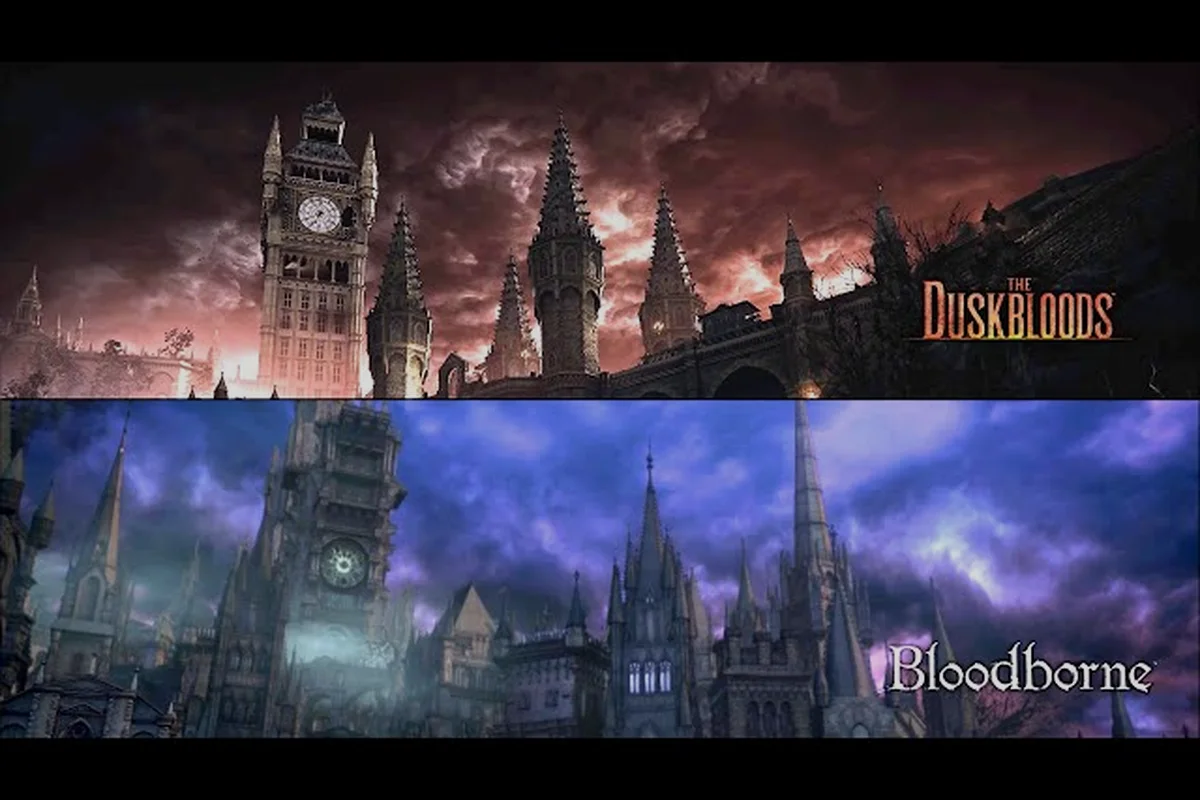
The Duskbloods era setting is one of the most talked-about mysteries in FromSoftware's upcoming Switch 2 exclusive, and for good reason: director Hidetaka Miyazaki has confirmed that players are "summoned from different eras to an undefined time and place." That single statement rewrites everything we thought we knew about the game's timeline — and it's exactly why the Duskbloods lore runs deeper than its Victorian surface suggests.
To understand what this means for the the Duskbloods story, you need to look past the gaslit streets and moonlit rooftops. The era isn't just a backdrop; it's the engine that powers the entire PvPvE format, the Bloodsworn concept, and the mysterious moontears prophecy. Below, I break down the confirmed details, the gothic Victorian foundation, the multi-era summoning system, and what the Twilight of Humanity really implies for the game's world-building.
The Duskbloods Era Setting Foundation: Summoned From Everywhen
The most important confirmed detail about the Duskbloods era setting comes straight from Miyazaki's interview with Nintendo's Creator's Voice series, where he explained that Bloodsworn are pulled from different historical periods into a battle royale-style contest. This isn't a single, fixed timeline like Bloodborne's Yharnam or Dark Souls' Lordran — it's a collision of moments, a battlefield where medieval knights could theoretically meet gun-wielding Victorian hunters and possibly even warriors from the far future.
According to the official FromSoftware press release from April 2025, the game takes place in a "gothic Victorian-styled world during the Twilight of Humanity," and the tagline reads: "The moontears will flow for one and one alone." The key phrase to sit with is "Twilight of Humanity" — a terminal state of the world, a final chapter where multiple timelines converge because the end is near.
-
Era convergence: Bloodsworn are drawn from multiple distinct eras, not born into one fixed setting
-
Undefined placement: Miyazaki deliberately kept the exact date and location unidentified, per community reports from the interview
-
Victorian aesthetic: The visual foundation borrows heavily from gothic Victorian architecture, gaslight technology, and period-appropriate firearms
-
Twilight context: The world is ending, which explains why the boundaries between eras can blur or collapse
The genius of this design is that it solves a classic FromSoftware problem: how do you justify a multiplayer game where players need distinct, readable silhouettes? If everyone comes from a different era, the character design can range from plate armor to trench coats to experimental uniforms, and it all makes narrative sense. The setting isn't just cosmetic — it's a gameplay justification baked into the Duskbloods story from the very first design meeting.
Decoding the Gothic Victorian World and Its Timeline
The gothic Victorian influence is impossible to miss in the trailers, but calling it "Victorian England" would be reductive. What FromSoftware has shown suggests a parallel-world Victorian aesthetic, one that borrows the visual language of the 19th century but layers it with supernatural elements — blood-drinking warriors, moon-based powers, and a world teetering on collapse.
What the Architecture Reveals
The environments featured in the trailers and the closed network test paint a detailed picture: cobblestone streets, wrought-iron fences, tall chimneys, cathedral-like structures, and interiors lit by gas lamps. The train level, which many players analyzed after the network test, features a steam locomotive with opulent passenger cars — a clear nod to the era's railway expansion but rendered with FromSoftware's signature decay.
| Architectural Feature | Historical Inspiration | In-Game Context |
|---|---|---|
| Cobblestone alleys and square | Mid-to-late 19th-century European cities | Primary traversal and combat spaces in the network test |
| Gas lamps and candlelight | Pre-electric street lighting (1840s-1880s) | Ambience, visibility mechanics, and mood setting |
| Steam trains and railway stations | Victorian railway boom (1840s-1900) | The train level serves as a major PvPvE map |
| Gothic cathedrals and spires | Medieval revival architecture | Likely boss arenas or central landmarks |
| Terrace housing and slums | Working-class Victorian districts | Vertical traversal and ambush spots |
The most striking detail is the moon presence in the skybox, which hangs unusually large and detailed, hinting at the lunar theme that dominates the Duskbloods story through the moontears prophecy. This isn't just a picturesque choice — the moon is likely tied to the summoning mechanic, the Blood Fate system, and the overarching Twilight of Humanity event.
Why Not Just "Victorian England"?
Miyazaki has been careful not to pin the setting to a real historical period. The "undefined time and place" quote is a deliberate narrative decision, because a specific real-world setting would create constraints the game doesn't want. If the world is a convergence point of multiple eras, then the Victorian gothic style is simply the visual dominant — the "fashion era" that most strongly characterizes the world's surface — while the underlying truth is that any era could be represented.
This also sidesteps the "Bloodborne clone" accusation that follows every FromSoftware project, as I explain in my analysis of the First Blood lore and Miyazaki's interview. The era setting is designed to be elastic, allowing the developers to introduce any architectural style, weapon, or fashion they want without breaking narrative coherence.
How the Multi-Era System Shapes Gameplay
You might be asking: does the era setting actually matter for gameplay, or is it just flavor text for the lore page? The answer is deeply mechanical, because the Duskbloods era setting directly justifies several core systems: the Twilight of Humanity premise explains why Bloodsworn are summoned across different times and places, which in turn supports the PvPvE structure of up to eight players per match. The superhuman abilities—sprint, super jump, and double jump—are framed as gifts of special blood, making the era's decayed, gothic atmosphere a functional backdrop for movement and combat. Victory Points, Destined Rivals, and Destined Companion goals all hinge on this temporal dislocation, as characters from disparate eras clash under a single dying sky. Thus, the setting is not decorative but the very engine that makes the Dusk Battles coherent, from the train level's Victorian rails to the dynamic events that can shift the match's outcome.
| Gameplay System | Lore Justification | Player Impact |
|---|---|---|
| Character variety | Bloodsworn from different eras bring distinct equipment | Ranged specialists, melee tanks, and hybrid fighters coexist mechanically |
| Blood Fate customization | Personal history from one's original era shapes abilities | Build variety without requiring a traditional class system |
| PvPvE format | The convergence of eras creates conflict over scarce resources (moontears) | Explains why strangers fight rather than cooperate peacefully |
| Victory Points system | Competing agendas from different eras create conflicting objectives | Some players may prioritize survival while others chase boss kills |
According to the official gameplay loop interview summarized on RPGSite, players are "summoned from different eras to an undefined time and place; each match revolves around Victory Points, and winning is not required to earn customization rewards." That last clause is critical — it means the era setting isn't just about visual variety, but about how players approach competition.
A knight from a medieval era might instinctively play defensively, seeking honorable duels, while a Victorian marksman might prioritize long-range control. Your character's presumed origin doesn't lock you into a playstyle, but it informs your Blood Fate choices and how you read the battlefield.
The Duskbloods Roster Connection
The multi-era premise also explains the playable character roster structure, where Bloodsworn from different backgrounds each bring unique starting loadouts. While the full roster hadn't been fully revealed as of the network test, the confirmed characters show a deliberate spread across visual archetypes — some armored, some dapper, some ragged — reinforcing the idea that this is a meeting of timelines.
For new players, this means the era setting isn't just trivia: it's a strategic layer that affects which characters you'll naturally gravitate toward based on your preferred playstyle. If you favor aggressive, close-quarters combat, you might pick a Bloodsworn whose unique melee weapon suits the cramped corridors of a gothic train carriage, while a ranged firearm becomes your backup for open plazas. Conversely, if you prefer mobility and hit-and-run tactics, the super jump and double jump—rooted in the era's supernatural blood gifts—let you exploit verticality in ways that static historical settings wouldn't allow. The Blood Fate customization further ties your loadout to the twilight theme, as your choices reflect a personal destiny that unfolds across the match. Since the network test showed 12+ playable characters with preliminary abilities, your era-driven preferences will likely evolve as more data emerges, but the core link between setting and strategy remains constant.
The Twilight of Humanity: How an Era Reaches Its End
The phrase "Twilight of Humanity" is doing enormous work in the Duskbloods lore. It signals a terminal stage — not a sudden extinction event, but a slow, atmospheric decline where humanity's best days are behind it. This is classic FromSoftware world-building territory, similar to the fading of the First Flame, but with a distinctly lunar, blood-tinged flavor.
Reading the Signs in the World
Every environmental detail in the trailers and network test contributes to the twilight theme: the gothic and Victorian visuals are not mere set dressing but active storytelling devices that reinforce the sense of a world at its end. The train level, for instance, features wrought-iron fixtures, gas lamps, and fog-drenched platforms that evoke a bygone industrial era, yet the sky is perpetually dim, with moontears—the game's central resource—hinting at the tagline 'The moontears will flow for one and one alone.' Cobblestone streets, crumbling cathedrals, and overgrown rail yards all bear the marks of a humanity that has passed its peak, which is why Bloodsworn are summoned from different times to fight in this twilight. These details also serve a mechanical purpose: they create sightlines, cover, and vertical routes that interact with your superhuman movement, making the environment a participant in every Dusk Battle. The closed network test (August 21-24, 2026) confirmed that players could read the era's decay through interactive elements, such as collapsing scaffolding or breakable windows, which reward exploration and situational awareness.
-
The moon's prominence: A swollen, watchful moon dominates the sky, suggesting lunar influence or perhaps a celestial event that triggered the era's decline
-
Fading architecture: Buildings show signs of neglect, with crumbling facades and overgrown vegetation — the Victorian splendor has already peaked
-
Sparse, desperate NPCs: The few non-player characters visible in trailers carry a haunted, weary energy, like people who know the end is approaching
-
The blood economy: Blood isn't just a power source; it seems to be a resource people trade, steal, and shed, implying scarcity and desperation
The moontears prophecy — "The moontears will flow for one and one alone" — positions the Twilight of Humanity as a contest with a single winner. If the world is ending, then perhaps the prize is survival, ascension, or a seat at whatever comes next. This reading makes the PvPvE format not just a game mode, but the literal narrative event that defines the era's final chapter.
Historical Parallels in FromSoftware's Work
Players familiar with FromSoftware's catalog will notice echoes of their previous worlds. The era setting shares DNA with Bloodborne's gothic horror, but the convergence of timelines is closer to the Lord of the Rings-adjacent "age of men" concept in Elden Ring, or the "linking the fire" choices in Dark Souls. What makes the Duskbloods era setting distinct is the explicit multiplayer framing: the world doesn't end through a single protagonist's journey, but through an eight-player collision of fates.
If you want a deeper dive into how this connects to the game's narrative structure, my story-explained guide breaks down the full sequence of reveals and what they suggest about the overall plot. The short version: every match is a microcosm of the end of the world, and every Victory Points decision is a small piece of the prophecy's fulfillment.
Era-Specific Mechanics and Environmental Storytelling
The era setting doesn't stop at architectural inspiration. It has direct gameplay implications that distinguish the Duskbloods era setting from static single-period worlds. Because Bloodsworn are pulled from different times and places, each match can feature characters whose weapons and tactics reflect their origin era, creating a rock-paper-scissors dynamic that keeps combat unpredictable. For example, a character with a Victorian-era revolver might struggle at long range against a fighter wielding a more modern rifle, but excel in the tight, gothic interiors where the train level's corridors limit sightlines. The Victory Points system rewards adaptability: you might need to switch between hunting a Destined Rival, supporting a Destined Companion, or contesting a boss kill, all while the dynamic events reshape the battlefield. This temporal fluidity also allows the developers to introduce new maps and characters post-launch without breaking immersion, since any era can be justified as another summoning point. Thus, the setting is a living rulebook that informs every engagement, from the opening sprint to the final moontear flow.
Combat and Technology Distribution
From the network test, players reported a fascinating mix of combat styles: some leaned into the superhuman mobility, using double jumps to flank enemies from rooftops, while others anchored themselves with heavy melee weapons, trading speed for raw damage in narrow alleys. The ranged firearms—each unique to a character—created distinct engagement ranges, with some players preferring to soften targets from afar before closing in for a finisher. The twilight theme influenced these styles, as the dim lighting and fog made long-range shots riskier, pushing many toward mid-range skirmishes. Destined Rivals often forced aggressive play, while those with a Destined Companion tended to coordinate defensive formations, using the environment's verticality to cover each other. The dynamic events, such as a boss spawning mid-match, broke up the rhythm, rewarding players who could pivot from PvP to PvE at a moment's notice. Overall, the test showed that the era setting's ambiguity—neither fully historical nor fully fantastical—encouraged experimentation, as no single tactic dominated across all maps and match conditions.
| Combat Style | Era Association | Confirmed/Inferred from Network Test |
|---|---|---|
| Sword and shield | Medieval-to-Renaissance eras | Confirmed in trailers; classic FromSoftware melee base |
| Firearms and parrying tools | Victorian era | Confirmed; multiple character reveals feature guns |
| Experimental/blood-forged equipment | Unknown/future or alternate eras | Inferred from Blood Fate descriptions and customization options |
The result is a combat sandbox that feels like a museum of warfare brought to life, where a rapier duelist can engage a shotgun-wielding brawler, and both must respect the same movement physics. The era setting doesn't introduce separate rules per character — it simply gives aesthetic and thematic variety to the shared core mechanics.
The Train Level as Era Collision
If you participated in or followed the closed network test, you likely saw the train level that dominated discussion. The train represents a perfect symbol of the era convergence: a Victorian steam locomotive, but the encounters happening on it involve characters who don't belong to its time. My train level lore breakdown covers the environmental storytelling in detail, but the key insight is that the train acts as a microcosm of the game's setting — a contained vessel moving through a world that's simultaneously advancing and decaying.
For lore collectors, the train level also offers the most concentrated environmental narrative: newspapers, posters, and luggage that hint at the world's state before the Twilight, and the varied clothing of the Bloodsworn who've been pulled aboard by the summoning.
What the Duskbloods Era Setting Means for Future Content
Because the era setting is deliberately undefined, FromSoftware has enormous creative latitude for post-launch content. The multi-era premise means future maps, characters, and weapons don't need to fit a single historical box. A future update could introduce a sun-scorched desert map from a forgotten civilization, or a rain-soaked industrial district from a later age, all justified by the Bloodsworn's cross-temporal summoning. This also extends to character design: new Bloodsworn could wield weapons that range from bronze-age blades to early firearms, each with unique mechanics that shake up the meta. The developers could even introduce era-specific dynamic events, such as a collapsing tower or a rising tide, that alter the battlefield in ways tied to that period's technology. Since the game is not yet released as of August 2026, with a launch window in 2026 and an exact date unannounced, this flexibility ensures that the live-service model—if adopted—won't feel repetitive. The community's enthusiasm, as seen in the network test's diverse playstyles, will likely drive demand for such expansions, and the setting's openness makes them feasible.
Potential Era Directions
| Potential Era | Design Opportunities | Evidence/Hints |
|---|---|---|
| Ancient/antiquity | Ruins, marble structures, spear and shield combat | LSI keywords in official descriptions suggest broader "dark fantasy" scope |
| Distant future | Industrial decay, experimental firearms, cold lighting | The "undefined" timeline leaves the door open |
| Alternate/fantasy eras | Non-historical architecture, magical technology | The blood-power system already pushes beyond pure historical accuracy |
| Near-contemporary eras | Trench warfare, early military equipment | Given FromSoftware's WWII-in-Elden-Ring design evolution, plausible for DLC |
This flexibility is a major competitive advantage for the game's longevity. Unlike a title locked to one historical period, the Duskbloods era setting can expand in any direction that the developers (or the community's enthusiasm) demand. A game set solely in Victorian London would eventually exhaust its visual and mechanical vocabulary, but the Twilight of Humanity premise allows for constant reinvention. For instance, a future map could feature a frozen tundra with ice that cracks underfoot, altering movement, or a dense jungle where foliage blocks sightlines, favoring melee over ranged combat. This variety keeps the PvPvE formula fresh, as each new era introduces novel environmental hazards and tactical considerations. Moreover, the Blood History and Blood Fate customization system can be expanded to reflect these new eras, letting players tailor their loadouts to the specific challenges of a given map. The network test's success—with five sessions over four days—suggests a strong player base that will appreciate this depth. As the game approaches its 2026 launch, this adaptability positions it to remain relevant long after initial release, much like other FromSoftware titles that thrive on community-driven discovery.
What Players Should Watch For
As the network test evolves and launch approaches, keep an eye on: the official sign-up window (July 22-28, 2026) and the lottery results (August 7) to secure a spot in the closed test, which runs August 21-24 across five four-hour sessions. Also watch for the code distribution on August 18, as well as any patch notes or developer commentary that might reveal more about the era setting's mechanical depth. Pay attention to community discussions about character abilities, since most names and powers are preliminary and could change before the final release. The tagline 'The moontears will flow for one and one alone' hints at a central mechanic that may be elaborated in future trailers, so monitor official channels for that. Finally, track how the dynamic events and Victory Points system evolve, as these will define the competitive meta. With a Switch 2 and Nintendo Switch Online required for the test, ensure your setup is ready, and consider how your preferred playstyle might align with the twilight theme's emphasis on mobility and adaptability. The era setting is not static, so expect surprises as FromSoftware continues to refine this ambitious PvPvE experience.
-
Character reveals: Each new character is a clue about their era of origin
-
Map showcases: Environment trailers reveal which historical styles the developers favor
-
Blood History and Blood Fate descriptions: These customization systems likely contain references to specific eras
-
The moon: Any changes to the skybox between versions could signal shifts in the timeline
The lore community, myself included, is actively tracking these details on the game's official site and social channels. The official The Duskbloods website has the most up-to-date network test information, though as of August 2026, the test application window for the first round has closed.
Frequently Asked Questions
What exactly is the Duskbloods era setting?
The Duskbloods era setting centers on a gothic Victorian-styled world during a period called the Twilight of Humanity. Director Miyazaki confirmed that Bloodsworn are summoned from different historical eras to an undefined time and place, meaning multiple timelines converge within a single dark fantasy battlefield.
Is The Duskbloods set in the same universe as Bloodborne?
No, The Duskbloods is not confirmed to share a universe with Bloodborne. While the visual style is similar, Miyazaki has emphasized it's a standalone title. The gothic Victorian elements are a thematic choice, not a canonical connection to Yharnam, despite what some players initially speculated in the Duskbloods lore community.
How does the era setting affect multiplayer gameplay?
The era setting allows for characters with visually distinct equipment from different periods, improving readability in the 8-player format. It also justifies the Victory Points system — characters from different eras have conflicting goals, which makes temporary alliances and betrayals feel narratively appropriate rather than random.
Why did FromSoftware choose an undefined timeline?
An undefined timeline gives the developers creative freedom to introduce diverse environments, weapons, and character designs without locking the world to a single historical period. It also reinforces the "Twilight of Humanity" theme, where the collapse of chronological boundaries mirrors the collapse of the world itself.
Will the era setting expand in updates or DLC?
We’re committed to expanding the Duskbloods era through free updates and thematic DLC chapters, starting with the sunken cathedral ruins and the ash-choked hinterlands. Each addition will deepen the world’s lore and introduce new bloodline powers tied to that region’s forgotten history, keeping the setting alive and evolving.